

grow
diving into the materiality of textiles by exploring the garchetypes most engaged with the natural and synthetic dichotomy

this series on garchetypes concludes with grow & heal, the two garchies most deeply informed by materiality mixing with false dichotomies, and whose epistemological potentials evolve from their fuzzy relationship with each other.
as evidenced on their garment tags, grow is the all natural, 100% biodegrade unstable, somewhat volatile shoe made from multiple parts of trees. on the surface, heal seems to be grow’s supposed antithesis: the long lasting petroleum & petrochemical glove.
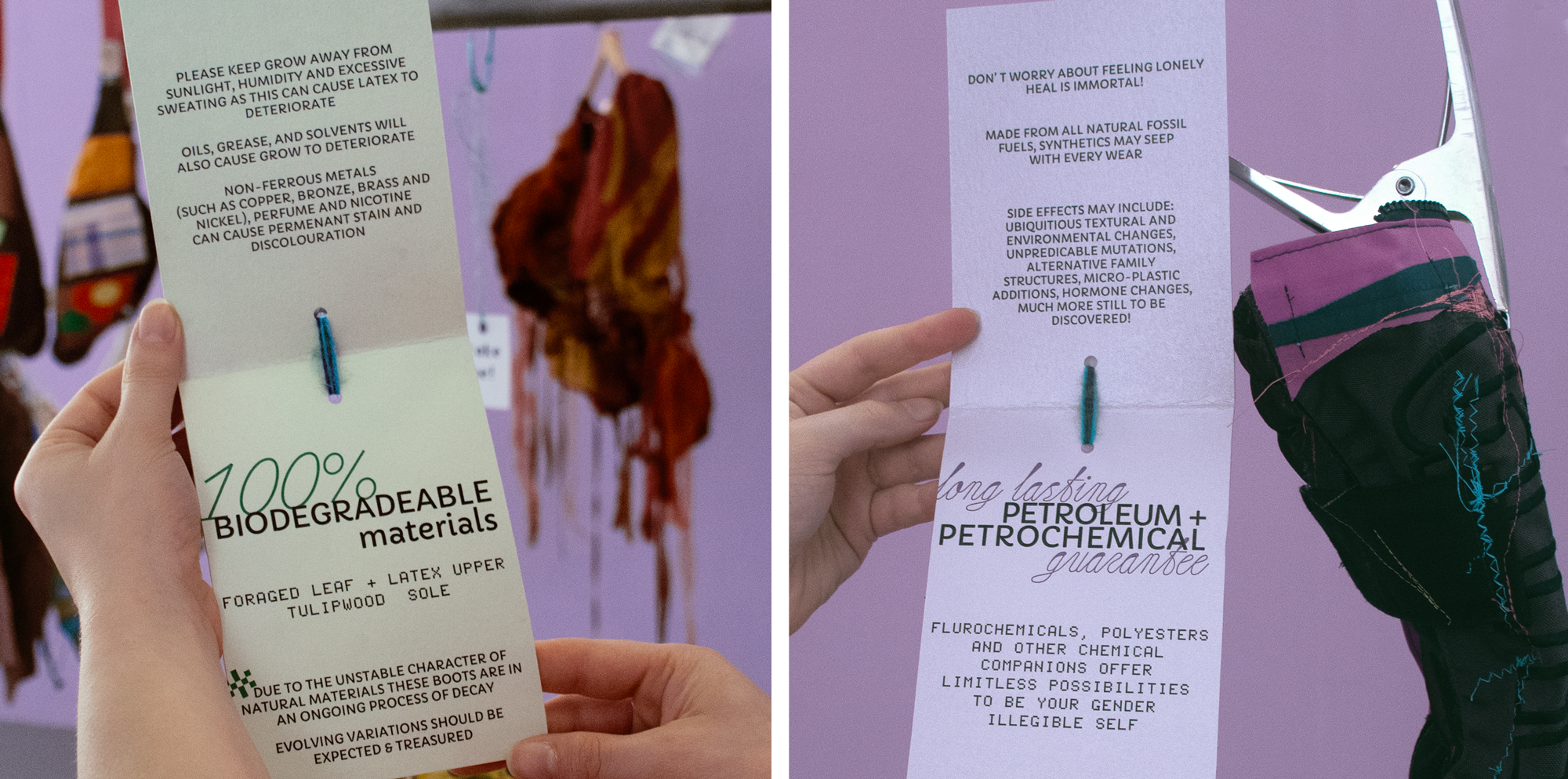
heal and grow do not get along. once upon a time, they were friends but, as it often happens, irreconcilable issues embedded into the fibres of the friendship has proven to be disastrous and led to some toxic online beef.
heal has made it their mission to expose what they believe is grow’s hypocrisy, how can anything be 100% natural? how can anything be 100% of any(thing)? is this world not shaped by concomitant materials, coming together again and again and again?
maybe it’s the (chemically induced) hormonal mood swings but heal is tired. EXHAUSTED! they can’t stand how grow gets seen as so much better… and thus somehow gets more respect. it seems totally preposterous to them!
and you know what… despite heal’s generally insufferable fuck boy attitude … maybe they’re not wrong?
maybe they are in fact on to something…!?!
maybe the world of natural & synthetic materials is more murky than we’ve been taught…!?!?!?!!?!
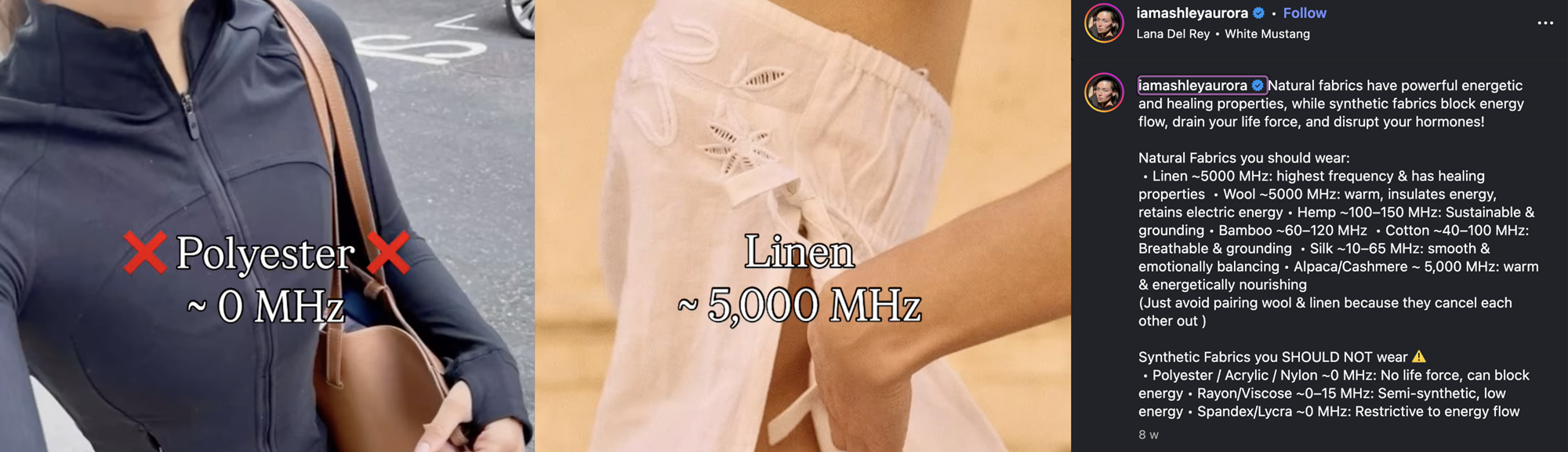
rather than considering the influence of natural and synthetic material properties in the design processes, we were curious to consider how natural and synthetic materials evoke a mythic value system in the cultural imagination. one that has contributed to purity politics, slippery hierarchies, and dubious marketing strategies noticeable in the tactics adopted by big brands, small brands, textile manufacturers, and instagram influencers alike. to me, this is most interestingly represented by a subsection of wellness influencing where there seems to be a trend of girls in white linen dresses talking about fibre frequencies as a way to justify the supposed superiority of natural materials. careful of that polyester bedsheet it has absolutely zero vibrational energy and is definitely killing you. so much for sweet dreams!
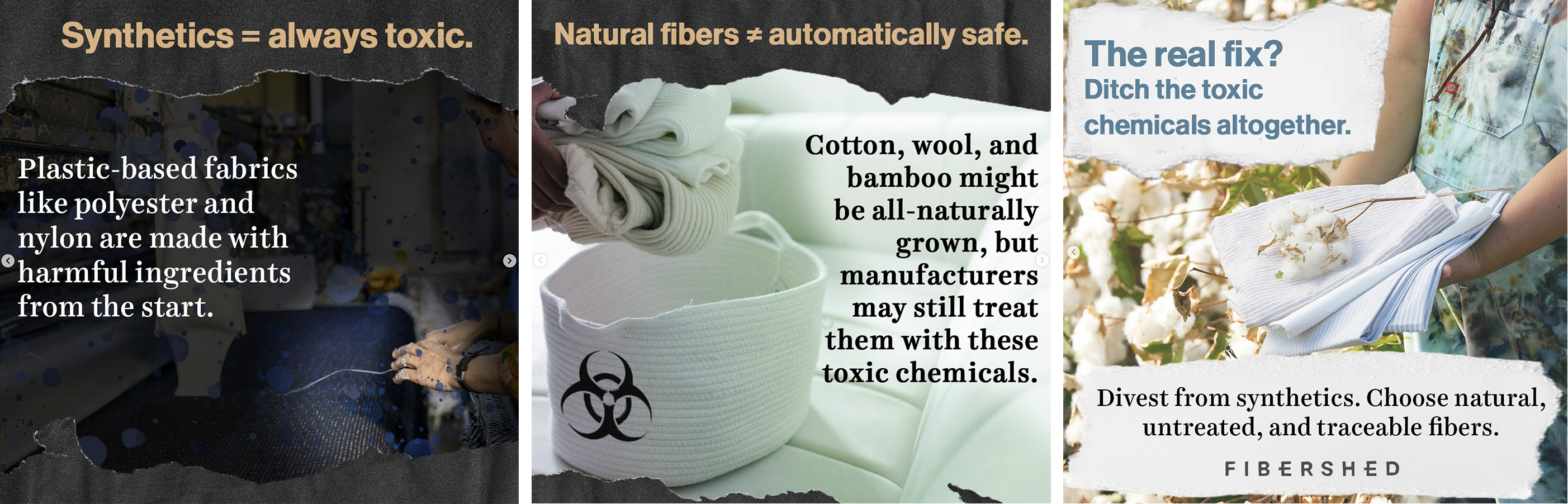
as extra as this may seem, the tacit implications of natural and synthetic fibres have a lot of influence on how garments are consumed, produced, extracted and constructed. and mayyyyybe has something to do with the widespread influence of the globalised textile trade in the web of neoliberalism. therefore it is worth considering what informs our understanding of the categories of natural and synthetic and where they come from in the first place.
in case you are not a textile expert, here’s a little background on fibre category basics that may be referenced ad nauseam throughout this newsletter (i’m sorry):
natural is commonly used to refer to plant (cellulosic) or animal (protein) fibres
synthetic refers to ‘man-made’ manufactured fibres (typically from plant/animal polymers or synthetic polymers).
i think that for both consumers and designers, many of the primary ways we evaluate the suitability of a garment rests on this binary distinction rather than the properties of the fibre itself. decisions evolve from suitability of natural vs synthetic first then… you go down the fibre route, finding details, features, benefits, distinctions. a large part of that is because there is a lot of implied meaning in these two categories. as designers and wearer we instantly think of synthetics as these high performance technical fibres, better for high intensity activity, even though synthetic fibres are plastic and therefore less breathable and potentially smothering as they trap heat. though this isn’t always the case… these preconceptions do shape a lot of our decision making processes.
in her book synthetic worlds, esther leslie argues that the successful emergence of synthetics (as a category) is connected to the prevalent human intervention in this process, where “the transformation of all nature into its artificial counterpart, as natural materials are remade synthetically in laboratories” (2005). it’s important to also consider the specific timing of the development of synthetics in the midst of the industrial revolution at a time where finding a cheaper dupe for natural materials was a potentially lucrative and exciting proposition if marketed successfully. here we then see the beginnings of this ideology where, regardless of its categorisation, “all that exists and can exist is natural, but processes of deriving complex compounds from reactions produce substitutes, analogues, imitations and duplicates, which, because of synthetic operations that bring them into being, seem to remain forever synthetic” (leslie 2005).
thinking through this, i follow bonita lawrence's (2004) perspective where “classification system produce a way of thinking - a grammar - which embeds itself in every attempt to change it”. building off of lawrence, alexis shotwell (2016) argues that classification systems are a colonial technology that serve the needs of those that uphold it. in the case of classificatory fibre systems, so-called man-made fibres are well suited to the interests of capital and become easier to dominate in ways that natural materials resist. for example “polyester is independently owned and managed by the private sector, and its processing is thoroughly industrialised” (grose 2008). the chemical companies that produce synthetic textiles (such as dupont) are more often than not intimately and physically linked to fossil fuel companies that deal in extraction (davis).
this connection with fossil fuels has led to a common misconception that synthetic fibres are somehow inherently ‘bad’ and natural fibres are (mostly) ’good’ in the sustainable fashion discourse. the reality is that the factors that impact the proposed sustainability of these categories is dubious, particularly when one considers the full lifecycle and production practices involved.
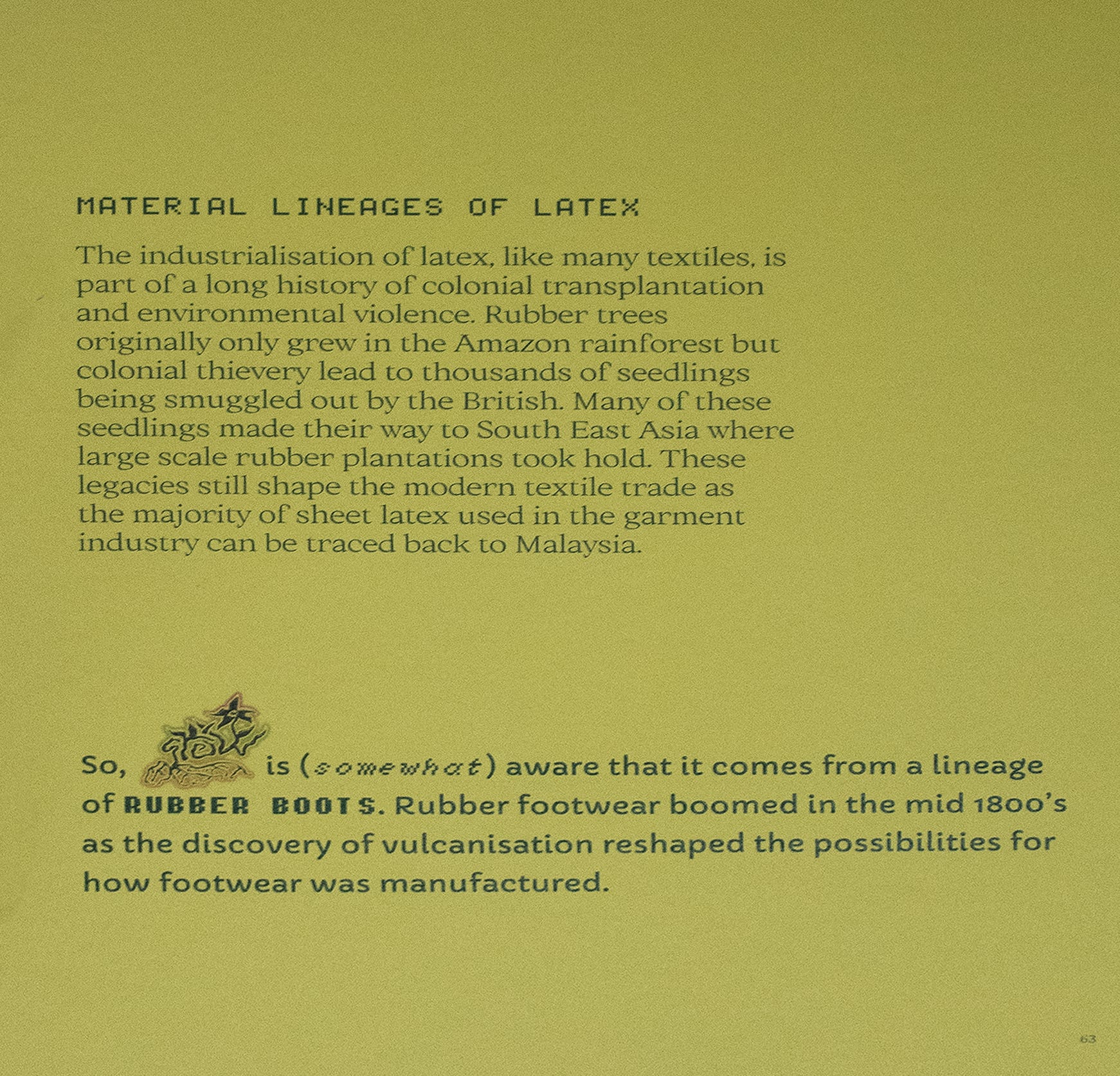
the logics of these binary systems become further disrupted with latex, one of the many tree based materialities from which grow has evolved. natural latex’s material journey starts deep in the forest with liquid rubber tree sap that undergoes a variety of transformation processes enabling it to be poured into a flat sheet. latex is therefore considered a plant based natural material but its production processes, impact, and usage is drastically different from other cellulosic fibres. for example, protein and cellulosic natural materials are often characterised by a tube like structure of fibres that are spun together. this is in contrast to synthetic polymer fibres that are extruded single filaments. latex is unique in that there is no singular strand of fibre as the fabric is made from pure liquid being poured and left to set as a sheet or in a mould or … potentially built up in layers painted on your feet.
also, we know natural materials don’t possess some innate safety. despite what the wellness influencers may want you to believe, natural is not inherently synonymous with non-toxic. toxicity is abundant in nature. it’s abundant in the world around us. more so, natural materials in the globalised textile trade are part of a robust manufacturing process that has chemical dyes and an abundance of treatments used on them to increase stain, fire, wrinkle, odour resistance and aid the dye process. the lack of traceability across supply chains make understanding the composition or the history or material purity of the product you are buying (or making!) extra difficult, dare i say impossible!
what many ‘natural’ materials do possess is a somewhat volatile ability to decay. an often commercially celebrated capacity to decompose, to biodegrade, to return. where the lustrous poly filament seemingly evades decay, the potential liveliness of natural materials are trapped under speedier temporal constraints. their demise comes quicker, their material changes occur in a timescape potentially noticeable and intelligible to our human faculties.
working with latex can be difficult because it is incredibly sensitive and requires you take lots of precautions. in the 7 years i’ve been working with it, i’ve made numerous mistakes and most of them were due to treating it with an irresponsible lack of care. the transformation from a rubber tree’s milky fluid to a glossy sheet means that latex also defies traditional modes of garment construction. it is most often assembled with adhesives rather than stitched, it cannot be ironed and god forbid throw it in the drier. if latex touches copper or nickel, it will begin to discolour, leaving a murky yellow or brownish stain at the site of close contact. another transformation will happen when latex is exposed to prolonged sunlight, as small white spots will appear on the surface eventually breaking down the material, its stretchy plasticity replaced with stiffness as it begins to crisp and crumble. loving latex requires a certain degree of attention to vitality that can not easily meet the needs of the garment-as-commodity; latex’s immanence further reveals itself, becoming luminous when caressed with silicone lubrication.
exploring these conceptions, and how they can manifest in unconventional garment making practices feels extremely poignant especially as these debates surrounding synthetic vs. natural materials in conjunction with sustainability, toxicity, planetary and human health become more widespread.
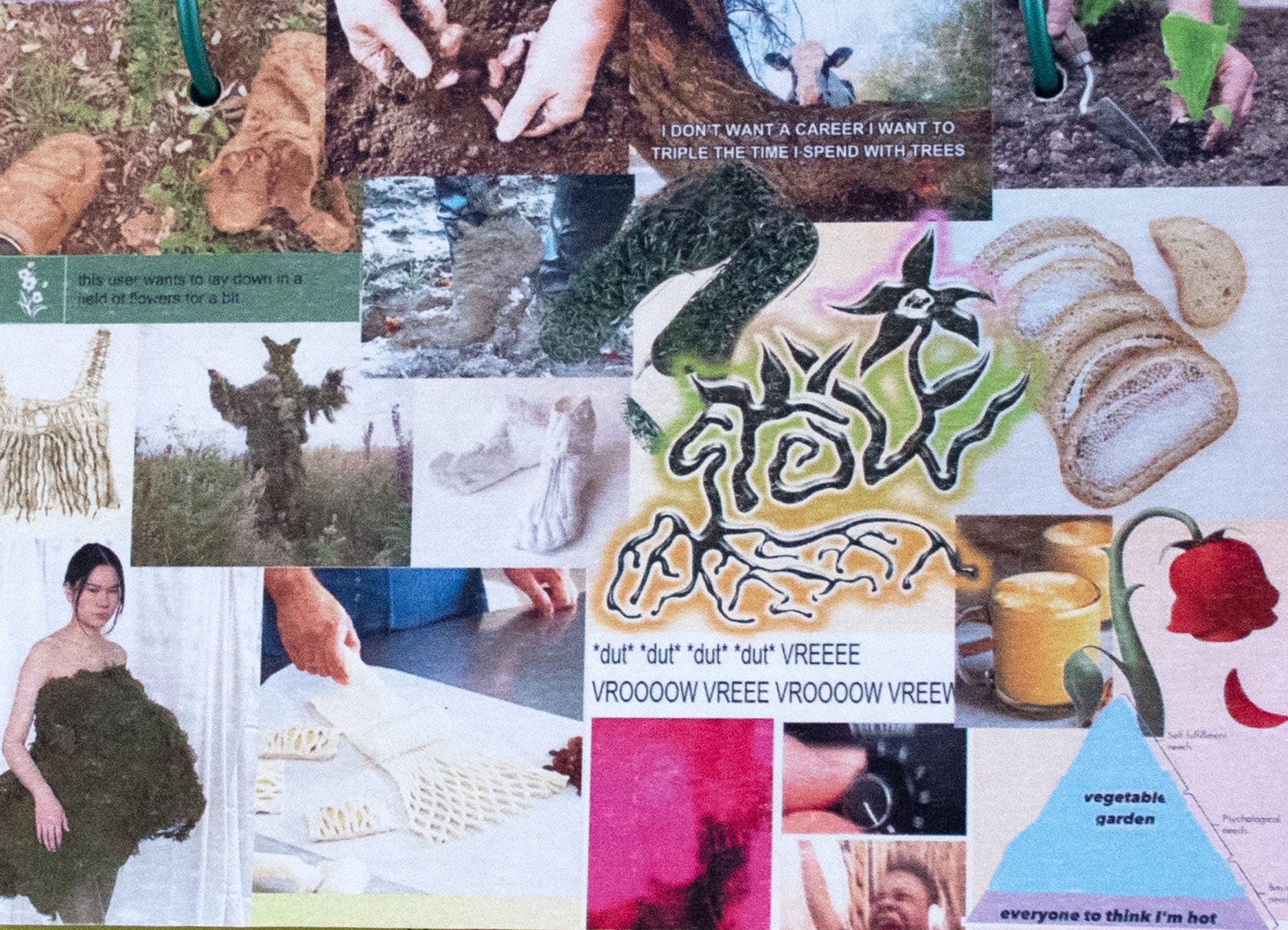
throughout this series, we have touched on our shift in coming to understand garments-as-thing (as opposed to garment-as-commodity) and exploring this through our making methodologies with the garchetypes. this idea comes from elizabeth grosz’s conception of the thing as that which has “a ‘life’ of its own, characteristics of its own, which we must incorporate into our activities in order to be effective” (grosz 2005). we posit that making communes with a garment’s thingness: it is an active engagement inclusive of rather than separate from. as making illuminates an awareness to the power dynamics and material relationships that are constitutive of a garment, an engagement with labour and materiality becomes paramount.
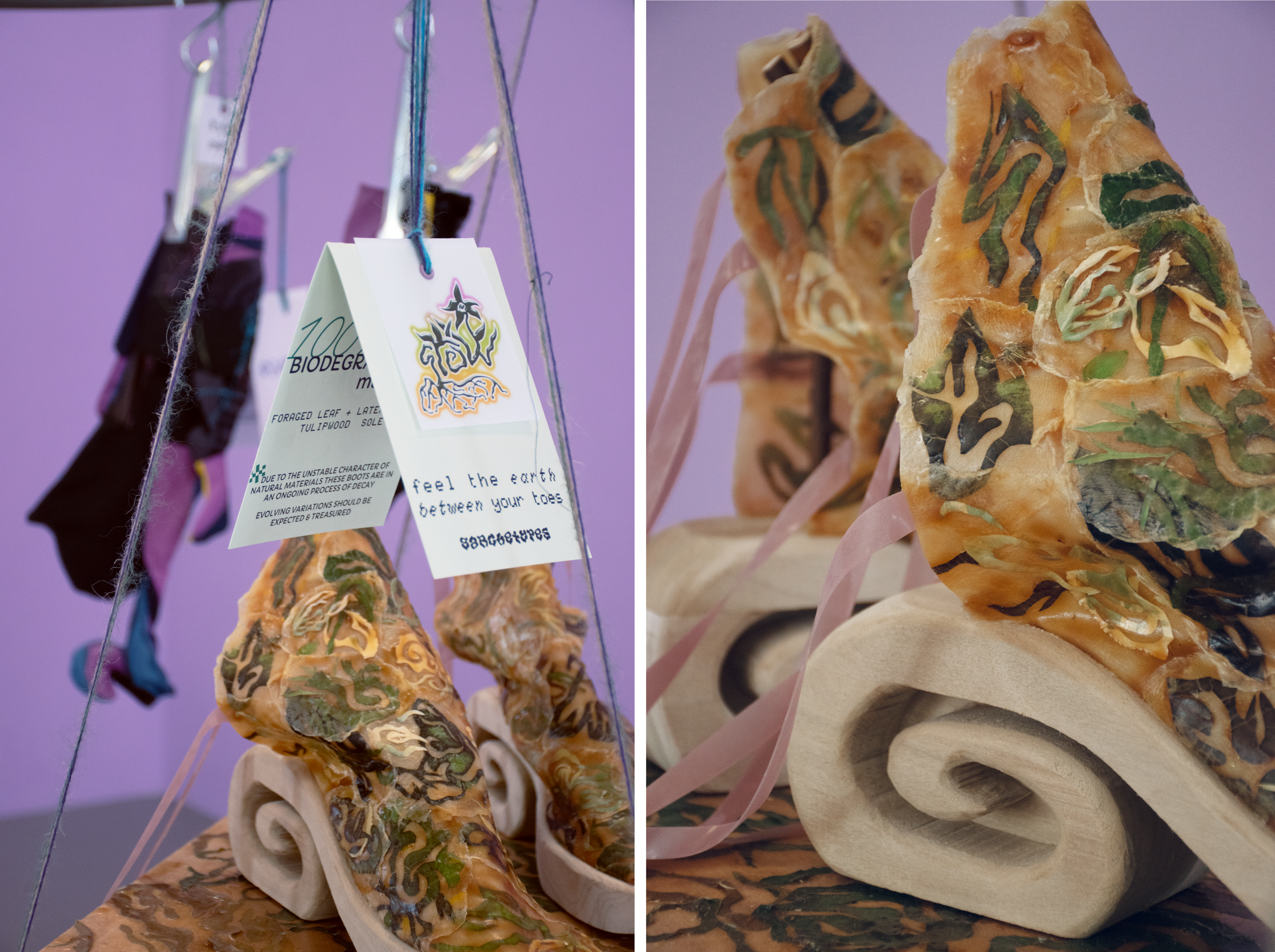
so let’s return to grow… the cute little healed bootie enabling you to feel the earth between your toes.
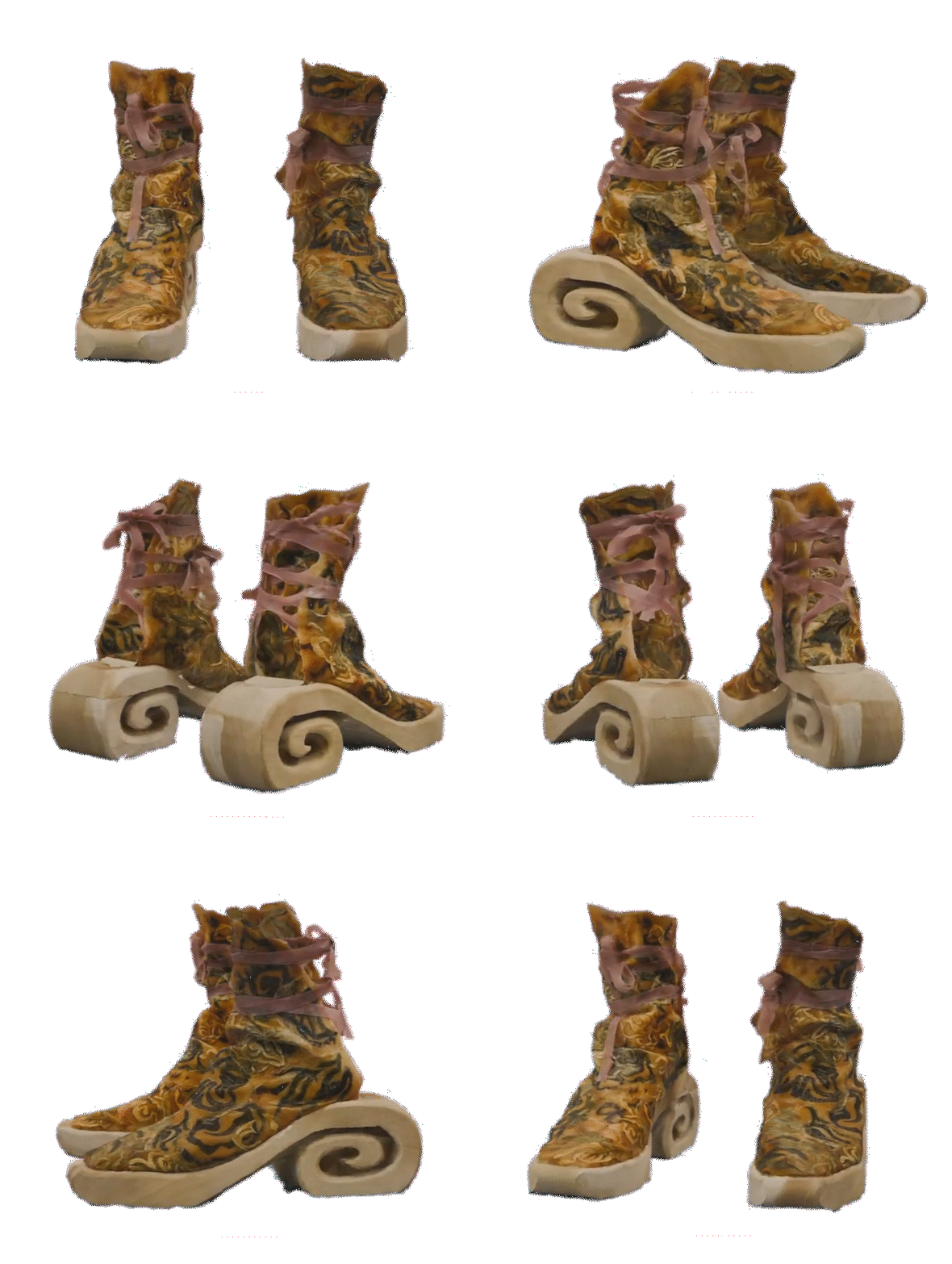
grow is comprised of a tulipwood sole and a sheet latex, liquid latex, and leaf upper. in this form, we see grow as a multitude of tree based materials coming together in various stages of growth, manufacture and decay.
grow had to be shaped. it wasn’t pre-made sheets of fabric that could just be cut into and then constructed. each part was a labour intensive process, one that somehow found my own body becoming part of it.
my original idea was to make pouches out of sheet latex which i was then going to fill with liquid latex and various other flowers/leaves and then seal up but …. that proved to be a horrible idea resulting in a tremendous amount of spillage and 1-2 tears.
after an afternoon spent with lots of trial and error and making a(nother!) big big big mess, i somehow came up with the idea to paint layers of liquid latex on my feet and place ornately cut out leaf pieces on top and then seal them inside more liquid latex and then peel this off my feet. idk. it worked. there was probably an easier system where i could have just done this on a flat surface. but there was something about how the faint lines of my skin remained in the latex as i peeled it off that gave the patches a fleshy composition. traces of its construction process rendered visible. embodied.
so i embarked on a tedious endeavour: i foraged leaves around new cross, cut spirals into them with a blunt exacto knife, i painted layers upon layers of liquid latex on my feet, slowly waiting - sometimes up to an hour - for them to dry. sometimes, being ever so impatient, i would embarrassingly walk around outside barefoot with my leafy patches exposed, eerily appearing as if they were a part of me, my search for closeness with tree like multiplicity creating a temporary growth of my very own. as much as i’m trying to romanticise this in the present, this was far from my demeanour. there was lots of stuff going on in that moment, and frankly i was impatient that they weren’t drying faster and that no matter how many i made, i felt like i was not getting any closer to having enough to construct a whooooole boot.
there are only so many hours in the day and i only have so many feet!
but doing these crafty things was also a solace from the more stressful stuff going on. and with perseverance and the normal lack of sleep, grow grew.
as makers “we find the thing in the world as our resource for making things, and in the process, for leaving our trace on things” (grosz 2005, p. 132). grow evolves with this thinking but then its agential capacities evolved on its own as we watched it decay and transform into something else.
in grow’s youth, (the degree show), they were beautiful, shiny. encasing these leaves in liquid latex thankfully preserved their colour a little. but as the degree show concluded, and time passed, we were rapidly witnessing how the visible effects of aging were taking their toll.
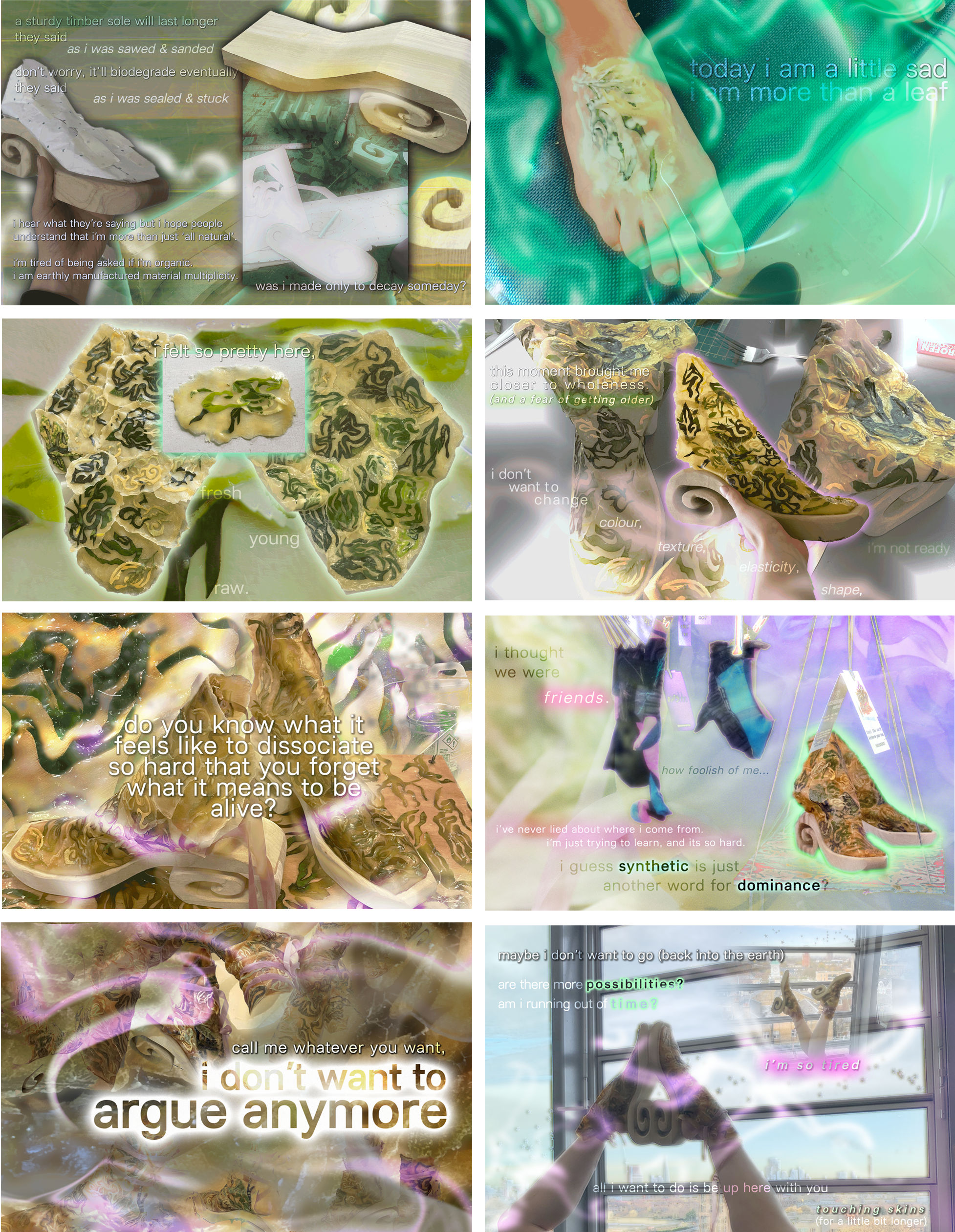
initially, i was compelled to try to preserve grow’s youthfulness, i was disappointed that this thing that i’ve made is not the same as first intended. every time i check on them, there’s a little pang in my chest, i know it’s different (and that’s okay!!!) but still… i don’t like it. i don’t like that it’s changing outside of my control. i don’t like that i can’t stop it. i don’t like that i can’t return it to how it was. shiny. dewy. fresh.
by seeing artefacts (and materials like latex) as things that grow and are grown (and thus require tending & nurturing to thrive), perhaps making can be understood as a process of growth, as an act with magical capacities to transform the already livelinesses of materials. latex’s material delicateness activates the sensitivity of the maker invoking a logic that encourages them to follow those characteristics rather than expect material to mould to their expectations. such logic may also activate the relational capacities between the maker and other materials whose sensitivities might be more robust and less obvious at first glance. what sticks to me here, is the desire to understand more-than-human materiality as ecologically entangled within systems of labour where all organisms are bound and connected in the web of life (ingold 2012).